

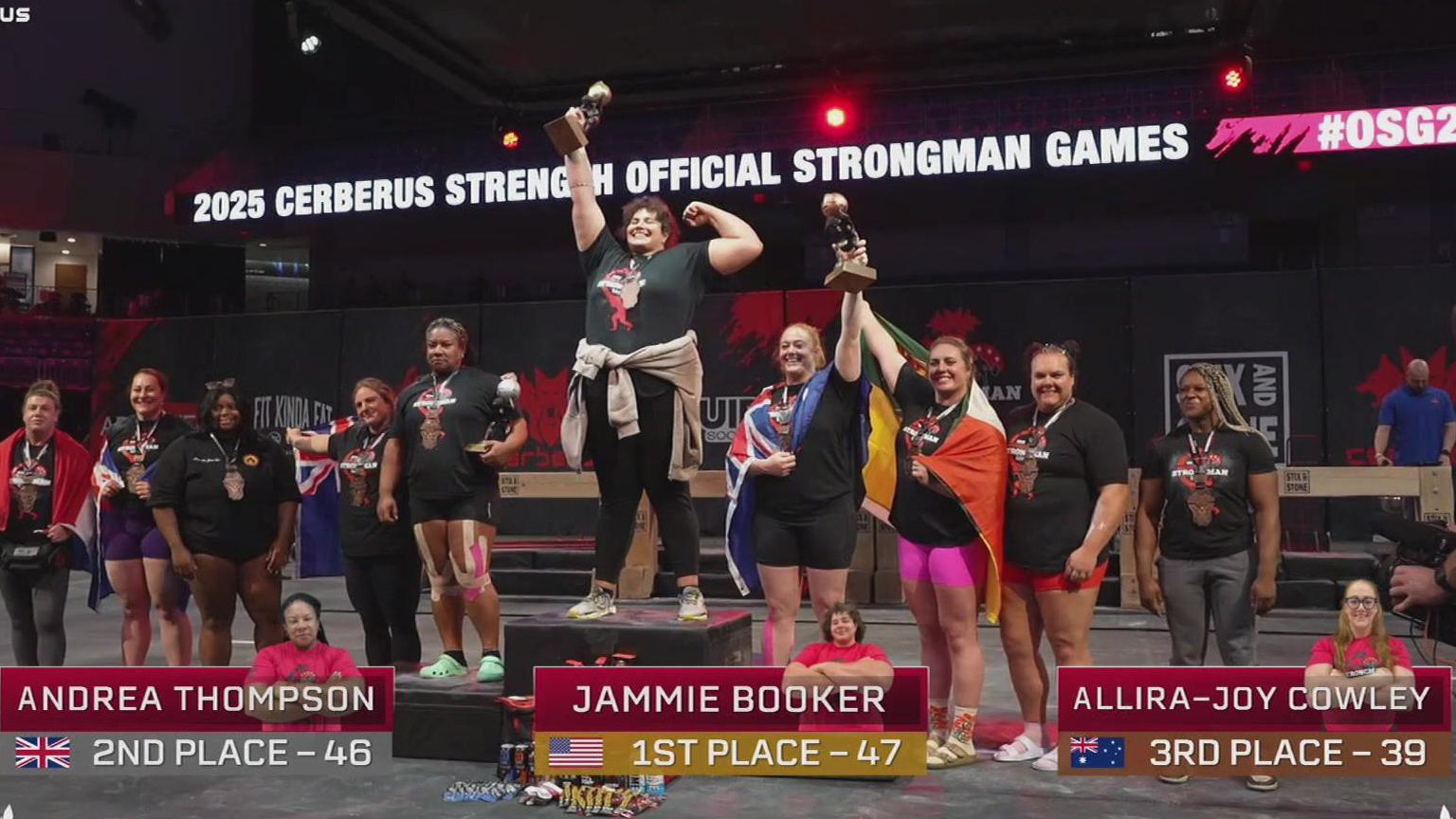
Jammie Booker faced disqualification from the world's strongest woman competition
A British competitor crowned the planet's most powerful female claims she was robbed of her victory celebration after it was revealed the original champion was a trans female who was ineligible to compete.
The British strongwoman was awarded the title after the fact after American athlete Jammie Booker was removed from competition.
The champion explained to athletic press the competition, held in the Texas city of Arlington, was clouded by somebody who wasn't eligible to participate.
"I was very frustrated and upset with what she's done," she stated. "She lied and was quite deceptive, and deprived a lot of things from a lot of female athletes.
"The lady that came 11th was denied the chance to do the third day... to have the elite ranking in the world."
Organisers, the competition body, said "competitors could only compete in the division for their birth sex registered at birth", and that they had eliminated the athlete in dispute "who is biologically male."
Event Background
Documentation indicate Booker participated in at least several additional female strength events this year - winning the Rainier Classic in June and finishing second at the continental championship in July.
Journalists were unable to reach the athlete and event officials confirmed "an attempt had been made to contact the athlete... but a reply had not been obtained."
The British athlete had originally finished runner-up to the American athlete
Thompson, forty-three, eventually was declared the world's strongest woman for the second occasion, having previously claimed the title in 2018.
But it was only after this year's event concluded that she discovered her opponent had been not qualified to participate.
"There existed nothing at all during the event - nobody had any cause to question any issues," said the mother of two from East Anglia.
"It was about several hours after that the first rumours started going round, and then the officials notified me.
"It represents a significant accomplishment that's been overshadowed by some deception."
Event Particulars
Power competitions have no single governing body, rather, private organizations run a range of events.
The Global Female Strength championship is awarded at the International Strength Competition, run by a British organization.
More than 400 competitors from approximately 40 nations took part in this season's event, which organisers characterize as "among the highest points of the power sports community."
The Games featured events across multiple gender, body mass and years categories.
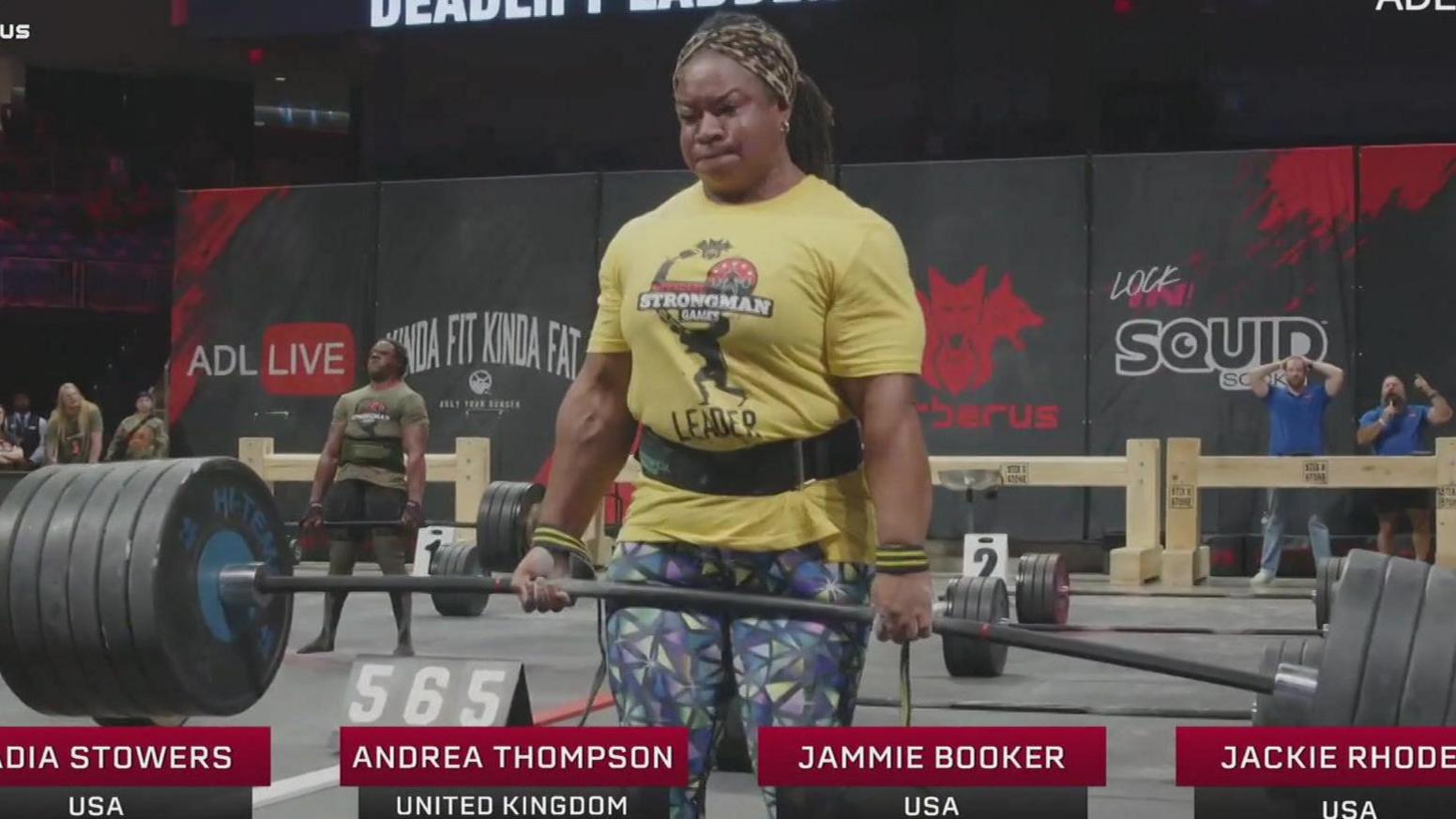
Thompson and the American competitor were in the Female Open division and participated in half-dozen events over three days, including the overhead press, timber frame carry and deadlift ladder.
Rules and Eligibility
An announcement from the organization said: "Competitors are placed to male or women's categories based on whether they are recorded as man or woman at birth.
"It appears that an competitor who is male by birth and who now identifies as female competed in the Female Open division... officials were not informed of this fact prior to the event."
In twenty twenty-three, the state introduced a regulation banning "males by birth from competing against female athletes", although this only applies to college and university sport in the state.
The champion thinks female strength events may implement sex screening in the coming years.
"I suppose it's going to have to proceed along that path... but our discipline is still quite new. There's insufficient money in it to have these things in operation. We depend on the integrity of the athletes."
Wider Athletic Landscape
In the past few seasons, a growing number of sports federations have barred competitors who have gone through puberty as males from participating in elite women's events, amid concerns over equity and safety, including global aquatics and athletics organizations.
In spring, major UK athletic organizations were among a group of institutions to follow suit, after the Britain's highest court's decision that the legal definition of a female is based on birth sex.
The moves have been challenged by trans rights activists, who argue they could infringe upon human rights and insist inclusion should be emphasized.
Both international athletics and pugilism organizations introduced chromosomal testing this season, asserting it is necessary to safeguard the integrity of female sports.
An official from international athletics has claimed that between 50 and 60 athletes who experienced male puberty have been top placers in the female category in global and continental athletics championships since 2000.
